From First Interest to Informed Decisions: KASE Academy’s First Year
Launched in July 2025, KASE Academy is bringing together employee development, investor education, academic partnerships and digital learning within a single ecosystem. Just over a year later, the focus is shifting from individual educational initiatives to a scalable model for building capital-market capability.
Exchanges are usually associated with infrastructure: trading systems, clearing, market data and the mechanisms that connect investors with issuers. But there is another part of market infrastructure that is less visible and increasingly important – knowledge. Access to a market is not enough. Participants need to understand how it works, how risks arise and how informed decisions are made.
When KASE wrote for WFE Focus in 2024, we described initiatives including investor seminars, KASE FEST, the Exchange Simulator and the Retail Investor Contest. Those programmes showed us both the demand for practical market education and the limits of treating education as a series of separate events.
That experience led to the creation of KASE Academy in July 2025: a way to bring these initiatives into one system and make knowledge accessible beyond the life of an individual event.
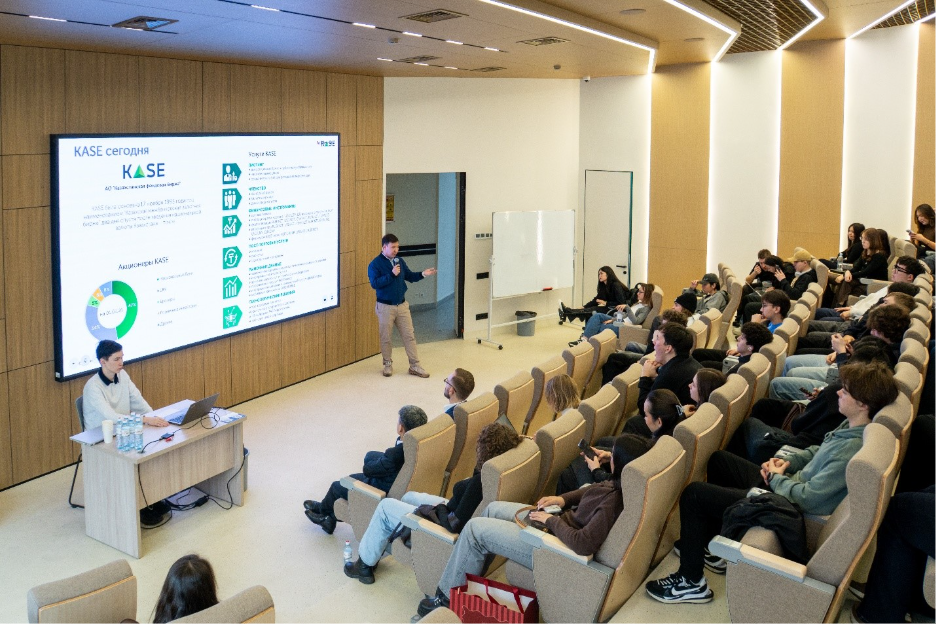
One academy, two audiences
KASE Academy was designed around two complementary priorities.
The first is internal capability development. The Academy coordinates professional development for employees of KASE and the KASE Clearing Centre, including specialised market training, international professional qualifications, management development and knowledge-sharing by internal and external experts.
The second is market education. Our programmes are designed for a much wider community: retail investors, issuers, banks, brokers and other professional market participants, as well as universities, students and future market professionals.
We see these directions as part of the same system. Knowledge accumulated within market infrastructure should not remain within the institution; interaction with the market, in turn, shows us where understanding is missing and where education needs to improve.
Since launch, more than 5,000 external participants have taken part in KASE Academy activities. More than 60 external seminars, lectures, webinars and other events have been delivered by experts and with partners. The Academy has also initiated 12 memoranda of cooperation, expanding KASE’s educational and institutional network.
These numbers matter, but reach alone is not the objective. A seminar can introduce an idea. The harder task is to create continuity: allowing a learner to return to it, understand it in greater depth and eventually apply it.
This thinking led to the KASE Academy Learning Management System, launched in July 2026. Its first stage includes three courses for beginning investors, more than 44 video lessons and automatically assessed practical assignments. Learners can track progress, complete tests and earn points and achievements, with content available in Kazakh, Russian and English.
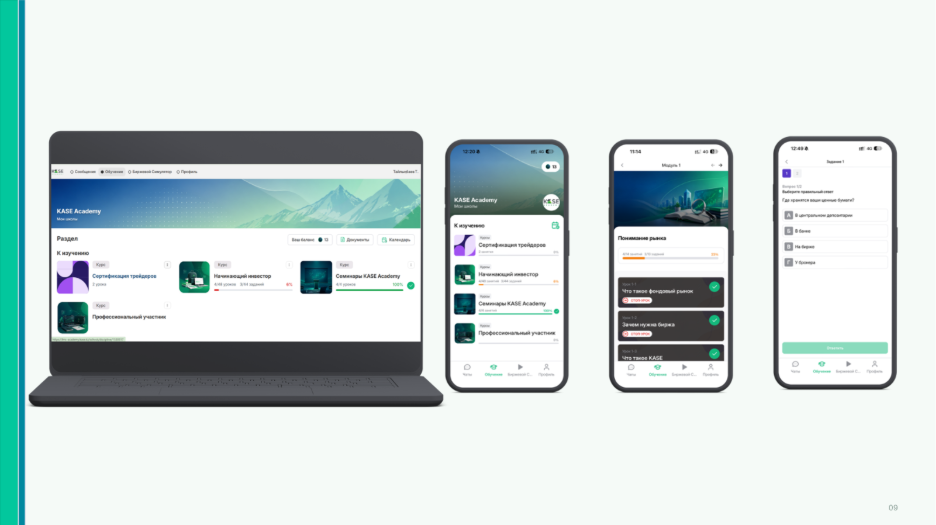
The same principle is guiding the next stage of our updated Exchange Simulator. We want users to move naturally from learning a concept to seeing how a market mechanism works, testing it in a simulated environment and learning from the result before real capital is at risk.
But education cannot depend only on people entering a classroom or opening an LMS. Financial information now reaches people through podcasts, short videos and social-media feeds. The KASE Podcast (KAST) was created to meet audiences where they already are, with conversations on capital markets, venture investment, investment in art and professional journeys. In its first four months, the project generated more than 140,000 views.

We have also begun developing short-form educational content, including TikTok, to reach audiences through the channels they already use in everyday life. For an Exchange, however, presence on these platforms is about more than communication. Financial information is increasingly consumed in short, fast-moving formats, where useful guidance can easily sit alongside oversimplified advice, misleading claims and digital fraud. In this environment, the credibility and clarity of information become particularly important.
KASE Academy therefore aims to make reliable market knowledge easier to access and understand, while helping people build a stronger foundation for navigating financial markets and recognising the risks involved.
That foundation should ideally be built before someone makes their first investment.
This is also why we are expanding our work with universities. Together with Maqsut Narikbayev University, KASE Academy launched a jointly developed minor programme that connects academic study with the practical workings of financial-market infrastructure. Students may learn valuation, portfolio management and risk in the classroom, but have limited exposure to how an exchange actually functions in practice. By bringing market practitioners, real cases and exchange expertise into the learning process, we aim to narrow that gap between theory and the market.
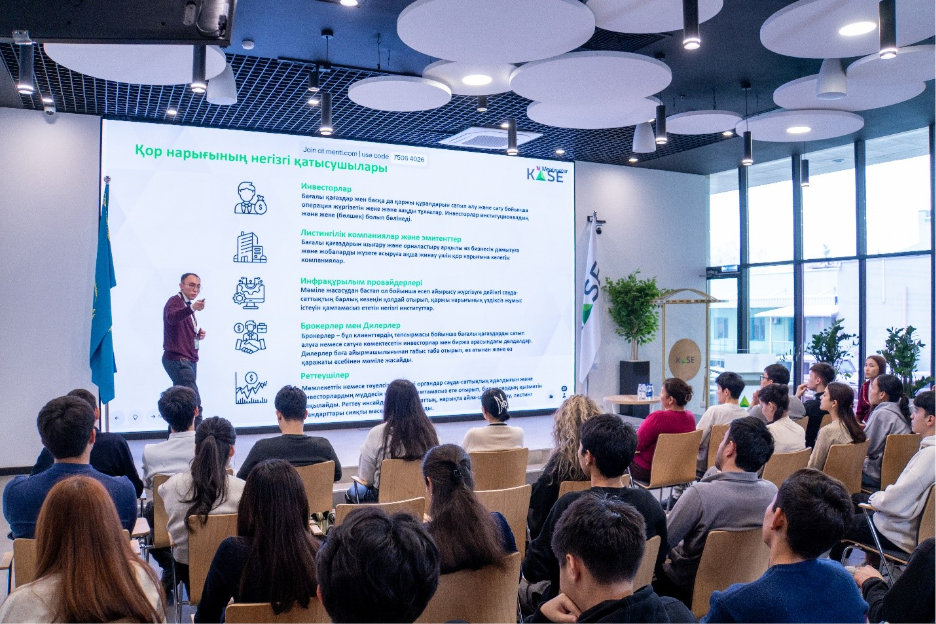
International exchange of experience is an important part of how KASE Academy continues to develop. Through engagement with peers such as Bursa Malaysia, London Stock Exchange, Luxembourg Stock Exchange and Muscat Stock Exchange, we have been able to explore different approaches to investor education, professional development and the broader role that exchange-led academies can play in supporting capital-market development.
At the same time, we do not see international best practice as something that can simply be replicated from one market to another. Each market has its own structure, level of investor participation, institutional environment and educational needs. For us, the real value of international cooperation lies in understanding what makes a particular approach effective and then considering how its underlying principles can be adapted to the context of Kazakhstan.
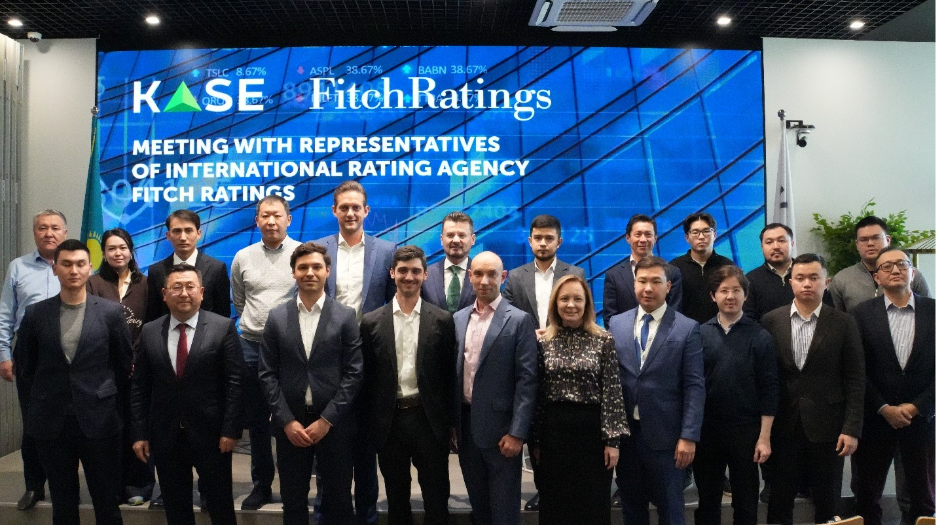
The next stage for KASE Academy is to make this learning journey broader, more connected and more continuous. We will continue developing the LMS, the Exchange Simulator and educational programmes for investors and professional market participants. At the same time, we want to begin engaging with future participants in the financial system at an earlier stage.
Together with the National Bank of Kazakhstan, we plan to explore financial-literacy programmes for school students, starting with pilot initiatives in selected schools. The aim is not to introduce young people to trading, but to help them build a practical understanding of fundamental concepts such as saving, risk, investment, financial institutions and fraud awareness before they begin making independent financial decisions.
In the longer term, our ambition is to create a more continuous learning pathway – from school to university, from a first introduction to financial markets to informed participation, and from foundational knowledge to professional expertise.
Disclaimer:
The views, thoughts and opinions contained in this Focus article belong solely to the author and do not necessarily reflect the WFE’s policy position on the issue, or the WFE’s views or opinions.