A New Era for Sustainable Finance: The VNX Green Equity Designation Pilot (2026)
Introduction: A landmark moment and the will to lead
The world is transitioning. For Vietnam, the urgent requirement for climate action is also driving its national economic strategy. This is fuelled by a powerful domestic mandate for sustainable development and a firm commitment to global climate action, including the ambitious goal of achieving net-zero emissions by 2050 in line with COP26.
In the spirit of this national purpose, the Vietnam Exchange (VNX) has accompanied the government by launching the pilot phase of its Green Equity Labelling Project in 2026 – a bold, transformative initiative designed to address the critical challenge of financing Vietnam’s low-carbon future.
The project is more than a new listing category; it is a fundamental pillar for realising the National Green Growth Strategy (2021–2030). It serves as a testament to the VNX’s unwavering determination and institutional willingness to pioneer and establish a credible standard that channels essential capital directly and efficiently into Vietnamese companies leading the climate transition.
The strategic imperative: Why 2026 is the time
The decision has been made to dedicate 2025 to intensive, strategic preparation for the VNX’s leadership role. In the current global economic climate, institutional investors – managing trillions of dollars in assets – are actively seeking investment destinations focused on sustainability. Their primary requirement is the provision of verifiable evidence of climate alignment from recipient companies.
This preparatory work is critical to ensure the Vietnam Exchange is best positioned to meet this demand and immediately leverage the project’s effectiveness for qualifying businesses upon its launch in 2026. Market surveys of the Vietnamese stock market indicate very strong potential for this initiative.
The number of listed companies implementing ESG disclosure (as of October 31, 2025):
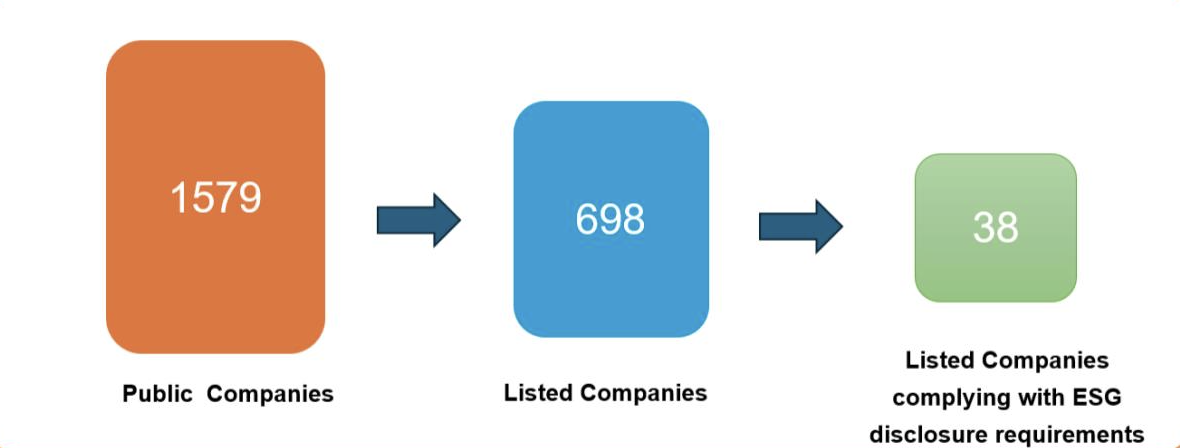 Source: VNX
This period of deep and extensive restructuring represents a significant achievement for the VNX over the past year. The Exchange is making a concerted effort to transform itself from a stock exchange that passively accepts listings into a proactive, market-shaping institution. This transformation involves strategically aligning its framework with international best practices, such as the Green Equity Principles of the World Federation of Exchanges (WFE). This foundational work is being built on the advice of key strategic partners, including FTSE Russell, to ensure the credibility of the labelling process.
The VNX views the implementation of this project to award a green designation to listed companies as a pilot model, demonstrating coordination with the region. Through this initiative, the VNX affirms its determination to cooperate with exchanges across ASEAN to promote and scale up the green-labelling model, thereby helping to steer the region towards green finance and strengthening unified regional efforts in the global fight against climate change.
The rigorous framework: Defining green tiers
To fulfil the commitment to building the most credible and rigorous framework in the region, the VNX’s methodology moves beyond a single, static threshold. The transition to a low-carbon economy requires recognising both “pure-play” green companies and the essential efforts of high-impact sectors actively shifting their business models. The VNX will therefore apply a tiered classification system to its Green Equity Designation, ensuring capital is channelled across the full spectrum of green commitment.
| Label tier | Financial alignment criteria | Strategic requirements | Purpose |
|---|---|---|---|
| 1. Green Aligned (Dark Green) | 50% or more of total annual revenue and/or investments originate from green activities consistent with the applicable taxonomy. | Requires absolute compliance with the ‘Do No Significant Harm’ principle and a near-zero dependency on excluded fossil fuel activities. | Designates companies whose core business is fundamentally green, serving as the ultimate benchmark for environmental excellence. |
| 2. Green Transition | 25% to less than 50% of total annual revenue or investments align with the green taxonomy. | Must possess a publicly disclosed and independently verified Climate Transition Plan with credible, time-bound, and quantitative targets for achieving Tier 1 status. | Essential for unlocking capital for the low-carbon shift, ensuring the designation is earned through action and future-proofing. |
| 3. Green Contributor (Light Green) | 10% to less than 25% of annual revenue and/or investments originate from qualifying green activities. | Requires full and transparent disclosure of the green revenue percentage and a demonstrable strategy for continuous improvement on an annual basis. | An entry-level designation designed to encourage broad participation from companies taking their first material steps in the transformation. |
This tiered structure enables the VNX to meet the diverse needs of global and domestic investors – from those demanding the darkest shade of green to those seeking to finance the essential journey of corporate transition.
Preparation pillars for 2025
The VNX’s preparation work for 2025 revolves around three main pillars, all built on strict adherence to internationally recognised standards:
- Trusted partnerships: VNX is collaborating with world-renowned experts to develop the methodology. This includes working directly with S&P Global Ratings to consider the application of Climate Transition Assessment (CTA) principles, and with LSEG Sustainable Growth, a specialised unit providing comprehensive data and analytics. This collaboration is a core mechanism for maximising integrity and ensuring the VNX framework reflects best practices in climate-risk assessment and is fully incorporated into periodic audit reports.
- Mandatory third-party verification: The VNX will require companies awarded the green label to obtain independent external verification from world-class assessment organisations. Approval decisions for all applicants will be evidence-based and free from standards bias.
- Forward-looking KPIs: The VNX is establishing clear processes to measure and report key performance indicators (KPIs), linking current performance to future environmental objectives.
The corporate and investor advantage
Successfully launching the Green Equity designation in 2026 delivers substantial value, accelerating the green transition for listed companies and securing assets for investors.
- For listed companies: The label provides a critical advantage by acting as a direct gateway to preferential capital. It places companies on the radar of global ESG-mandated funds, leading to increased liquidity and, crucially, a lower cost of capital – a measurable financial benefit in an environment where capital is vital for climate adaptation. By validating transition plans through a globally recognised assessment process, companies gain powerful competitive differentiation, making them attractive to discerning global partners and helping to future-proof their businesses against increasing climate regulation and carbon border adjustments.
- For investors: The label offers a de-risked asset class. Rigorous third-party assessment provides a robust anti-greenwashing safeguard, ensuring assets are genuinely climate-aligned and simplifying capital allocation. The VNX will ensure all essential information, including external review reports, is made publicly available, driving transparency and fostering trust in the Vietnamese market.
Navigating the challenges: Our will to succeed
The VNX has used 2025 to prepare for, anticipate, and mitigate the risks associated with this transition project. Its determination is demonstrated through proactive engagement with challenges from the outset:
- The greenwashing risk: The greatest threat is a failure of integrity. This is addressed through non-negotiable requirements for mandatory external verification and clear, published rules for immediate label withdrawal and penalties. The VNX will act as a firm regulator to protect market credibility.
- The operational burden: The project requires a significant operational shift, including investment in new IT infrastructure and the establishment of a specialised regulatory team with deep expertise in climate science and taxonomy interpretation. This investment underscores the VNX’s commitment to a successful launch and sustained oversight.
- Data quality and consistency: The VNX recognises the challenge of sourcing and verifying granular, consistent data across Vietnam’s diverse sectors. It will work transparently with companies and world-class assessors to establish clear protocols, ensuring fair and consistent application of the rules across all industries.
The Exchange’s commitment: Infrastructure and implementation
The year 2025 is a foundation-building year, with the VNX working closely with market regulators to establish the necessary infrastructure. Regulators are responsible for setting the overarching legal framework and comprehensive rules for green equity classification. The VNX is focused on developing and implementing the practical mechanisms required for enforcement and compliance, reflected in the following areas:
- Compliance leadership: A dedicated compliance team has been established to focus exclusively on the Green Equity mandate, ensuring accurate interpretation and application of regulatory rules.
- Implementation mechanisms: Clear, non-negotiable rules govern label withdrawal and penalties for non-compliance, safeguarding accountability and integrity in line with the national regulatory vision.
- Technology investment: A new Green Equity website portal and public data repository are being launched to streamline compliance for companies and enhance transparency for investors.
Conclusion: A transformative call to action
The success of this pilot project depends on the shared determination of the VNX and its listed partners. The year 2026 marks the moment when Vietnamese green capital and climate strategy formally align.
This is more than a label; it is a market transformation driven by collective leadership. With the most credible and rigorous Green Equity framework in the region, supported by world-leading assessment entities, the time for the Green Equity Pilot is now.